Blog
Top Fly Ash Brick Plant Manufacturers in India: A Complete Buyer’s Guide

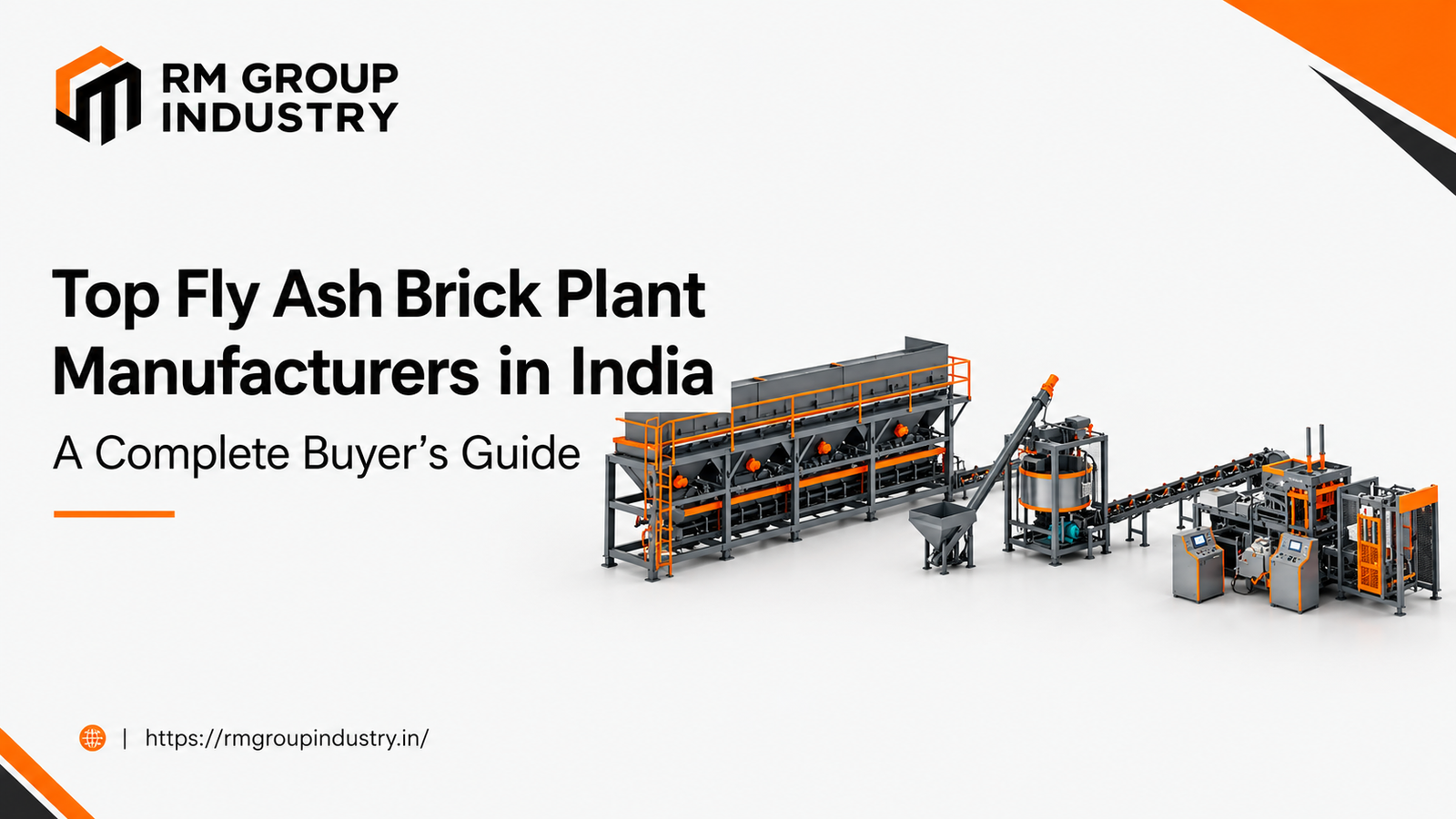
Thinking of starting a brick business or upgrading your existing unit? The machinery you pick will shape every brick you sell. A well-built Fly Ash Brick Plant delivers consistent quality, steady daily output and low running costs, while a poor choice leads to downtime, wastage and unhappy customers. This guide covers how these plants work, the types available, what to look for in a manufacturer and why many buyers shortlist RM Group Industry.
Understanding the Basics of Fly Ash Brick Manufacturing
Fly ash is the fine ash collected from coal-fired thermal power stations. In a brick plant it is blended with cement, stone dust, sand and lime, then pressed under hydraulic pressure with vibration. The result is a strong, uniform brick with accurate dimensions and a smooth finish. A modern Fly Ash Brick Plant also keeps material wastage low, which protects your margins from the very first batch.
The process runs in five stages:
- Batching the raw materials in the correct proportions
- Mixing them evenly in a heavy-duty pan mixer
- Moulding the mixture under hydraulic pressing and vibration
- Stacking the fresh bricks on pallets, manually or with a robotic stacker
- Curing the bricks until they gain full strength
Why Invest in a Fly Ash Brick Plant in India?
Housing, commercial buildings and infrastructure projects all need bricks, and buyers increasingly ask for eco-friendly options. A Fly Ash Brick Plant lets you serve that demand with a product that is economical to make and greener than traditional clay.
- Dependable demand from builders, contractors and developers
- Affordable raw materials, since fly ash is easy to source near thermal power plants
- Uniform bricks that speed up laying and reduce mortar and plastering effort
- An environmentally responsible product made from industrial waste
- Plants that can be sized to match your budget and local market
Indian environmental rules also encourage the use of fly ash in construction, especially around thermal power plants, so the long-term outlook for these bricks stays positive.
Fly Ash Bricks Compared with Clay Bricks
Clay bricks depend on fertile topsoil and kiln firing, and their size and strength can vary from one batch to the next. Fly ash bricks are made in a controlled process, so each brick looks and performs like the one before it. Flat, even faces help masons work faster, and the use of waste material makes them the more sustainable choice. For a buyer, this consistency is what turns a brick unit into a dependable business.
Which Type of Plant Fits Your Business?
Manufacturers usually supply three configurations. Your budget, available labour and daily output target will point you to the right one.
Manual Plants
Manual plants ask for the lowest investment, which makes them a good fit for small units and first-time entrepreneurs. The trade-off is a heavier reliance on labour and a lower daily output.
Semi-Automatic Fly Ash Brick Plant
The semi-automatic option balances cost and productivity. RM Group Industry’s semi-automatic Fly Ash Brick Plant is designed to cut pallet requirements, cement usage and curing time while keeping production efficient and reliable. It suits growing manufacturers who want better output without paying for full automation.
Fully Automatic Plants
Fully automatic plants take care of mixing, moulding and stacking with very little manual work, often with a robotic brick stacker. They deliver the highest output and the most consistent quality, so they suit large manufacturers and bulk suppliers.
What to Look for in a Manufacturer
Production Capacity
Compare daily output with your market demand, land, power supply and workforce. Ask if the capacity can be customised so you can expand later without replacing the whole setup.
Build Quality and Technology
Check the hydraulic system, vibration unit, mixer and frame. Sturdy steel construction, simple controls and low maintenance needs keep downtime short and brick quality steady.
One-Stop Machinery Range
A supplier that also provides pan mixers, batching plants, silos, cuber machines and bag stackers lets you build the entire line in one place, with machines made to work together.
After-Sales Service
Installation, operator training, spare parts and fast service response matter as much as the machine. Ask for customer references and, if possible, visit a plant that is already running.
Total Cost of Ownership
Look past the price tag. Compare electricity use, cement consumption, wastage, upkeep and expected output. A cheaper machine that wastes material often costs more over time.
Mistakes to Avoid When Buying
Most regrets after purchase come from a few avoidable errors:
- Picking the lowest quote without checking build quality or support
- Buying far more capacity than your local market can absorb
- Overlooking the supply of fly ash, cement and sand near your site
- Skipping operator training and a trial run before final payment
Why Buyers Consider RM Group Industry
RM Group Industry is a Greater Noida based manufacturer of brick, block and paver making machinery. Its fly ash brick plant comes in manual, semi-automatic and fully automatic configurations, so you can match the machine to your production needs and budget. Advanced hydraulic pressing and vibration technology supports consistent quality, smooth finishing and reduced wastage.
The company also supplies pan mixers, batching plants, silos, cuber machines, multi block plants and AAC block plants, which makes it easy to plan a complete unit with one supplier.
Frequently Asked Questions
What raw materials are used to make fly ash bricks?
The main materials are fly ash, cement, stone dust, sand and lime. The exact mix depends on the strength you need and what is available locally.
Which plant is best for a first-time buyer?
Many newcomers start with a semi-automatic plant because it balances investment and output. Confirm the best fit with your manufacturer based on your budget and target capacity.
Can the production capacity be customised?
Yes. RM Group Industry offers customisable production capacity, so you can choose a setup that matches your requirement.
Final Thoughts
The best plant is the one that fits your capacity target, budget and growth plans, and comes from a manufacturer who stands behind the machine. Compare configurations, inspect build quality, ask about support and weigh the total cost of ownership before you invest in a Fly Ash Brick Plant for your business.