Fly Ash Brick Making Machine: Complete Buyer's Guide 2026 | Features, Price & ROI
India produces over 220 million tonnes of fly ash every year — a massive industrial by-product from thermal power plants that was once considered waste. Today, it is the raw material powering one of India’s fastest-growing construction material segments: fly ash bricks.
If you are planning to start a brick manufacturing business or upgrade your existing plant, investing in the right fly ash brick making machine is the single most important decision you will make. The right machine determines your production capacity, product quality, operating cost, and ultimately — your profit.
As a leading fly ash brick making machine manufacturer in India, we have helped hundreds of entrepreneurs and construction businesses set up profitable brick manufacturing units across the country. In this guide, we share everything you need to know before making your purchase.
What Is a Fly Ash Brick Making Machine?
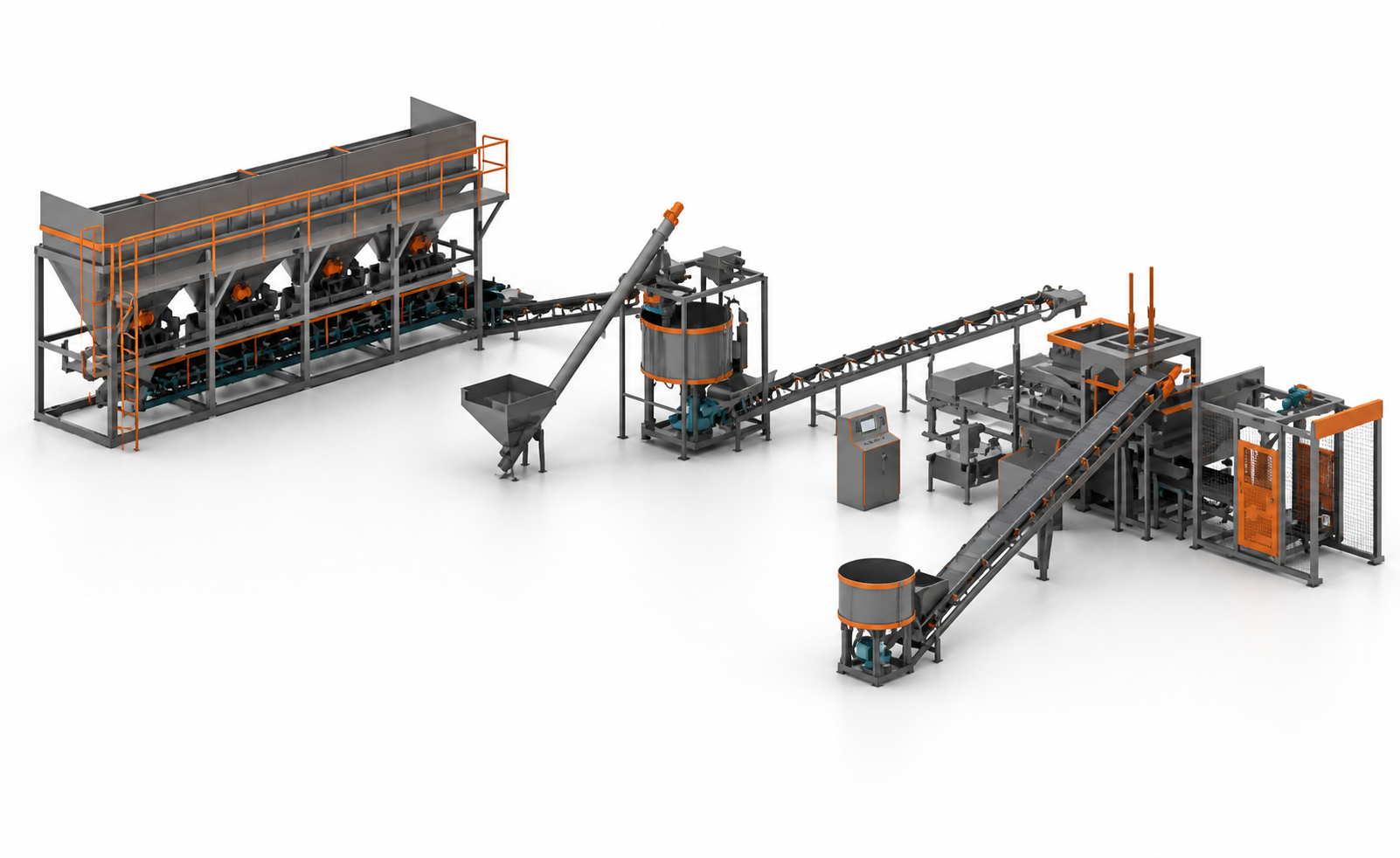
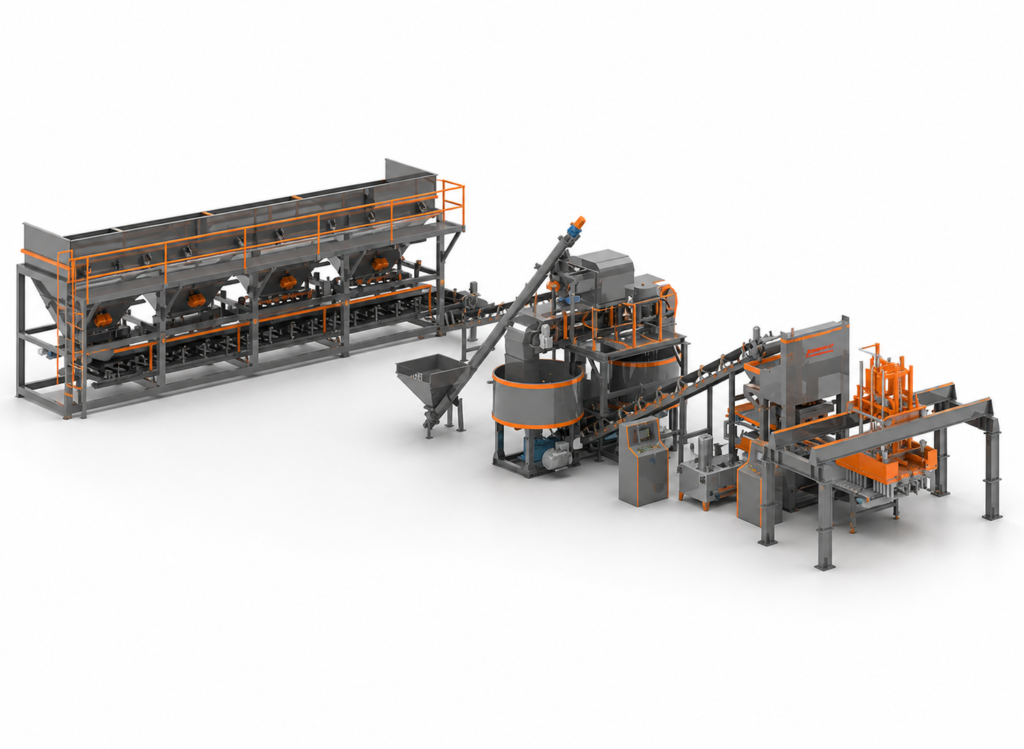
A fly ash brick making machine is heavy-duty industrial equipment that converts fly ash — mixed with cement, lime, gypsum, and sand — into high-strength, uniform building bricks through a process of hydraulic compression or vibro-pressing.
Unlike traditional clay brick kilns, fly ash brick machines do not require firing or burning, making the process cleaner, faster, and far more environmentally friendly.
How a Fly Ash Brick Making Machine Works: Step-by-Step
Understanding the production cycle helps you choose the right machine for your output goals.
Step 1 — Raw Material Batching
Fly ash, cement, sand, and gypsum are weighed and batched in the correct proportions. Automatic machines use a computerised batching system for accuracy.
Step 2 — Wet Mixing
The dry ingredients are combined with water in a pan mixer or twin-shaft mixer to form a consistent, workable mix.
Step 3 — Mould Filling
The wet mix is fed into steel moulds. The mould size defines the brick dimensions.
Step 4 — Hydraulic Pressing
A powerful hydraulic press applies 200 to 400 tonnes of force, compacting the material into a dense, high-strength brick. This is the most critical step for brick quality.
Step 5 — De-moulding & Stacking
The freshly formed bricks are pushed out of the mould onto wooden or plastic pallets and stacked carefully.
Step 6 — Curing
Bricks are cured for 7 to 28 days using water curing or steam curing to achieve full compressive strength.
Types of Fly Ash Brick Making Machines We Manufacture
We offer the complete range to suit every scale of operation:
1. Manual Fly Ash Brick Making Machine
- Best for: First-time entrepreneurs, rural markets
- Production capacity: 1,000 – 3,000 bricks per day
- Labour requirement: 4 to 6 workers
- Investment level: Low
- Key advantage: Lowest entry cost, simple to operate
2. Semi-Automatic Fly Ash Brick Making Machine
- Best for: Medium-scale brick plants
- Production capacity: 6,000 – 12,000 bricks per day
- Labour requirement: 2 to 4 workers
- Investment level: Moderate
- Key advantage: Best balance of cost and productivity
3. Fully Automatic Fly Ash Brick Making Machine
- Best for: Large-scale manufacturers and contractors
- Production capacity: 15,000 – 60,000+ bricks per day
- Labour requirement: 1 to 2 operators
- Investment level: High
- Key advantage: Maximum output, consistent quality, lowest per-brick cost
4. Mobile Fly Ash Brick Making Machine
- Best for: On-site brick production, remote project locations
- Production capacity: 3,000 – 8,000 bricks per day
- Key advantage: Portable, eliminates transportation cost